
In a remarkable silver lining to Isro’s failed PSLV-C62 mission on January 12, 2026, Spanish startup Orbital Paradigm’s Kestrel Initial Demonstrator (KID) survived extreme re-entry conditions and beamed back vital telemetry data from space.
Mounted on the rocket’s PS4 upper stage as a co-passenger, the 25-kg football-sized prototype endured a steeper atmospheric plunge than planned, transmitting 190 seconds of system data before splashing down in the remote southern Indian Ocean.
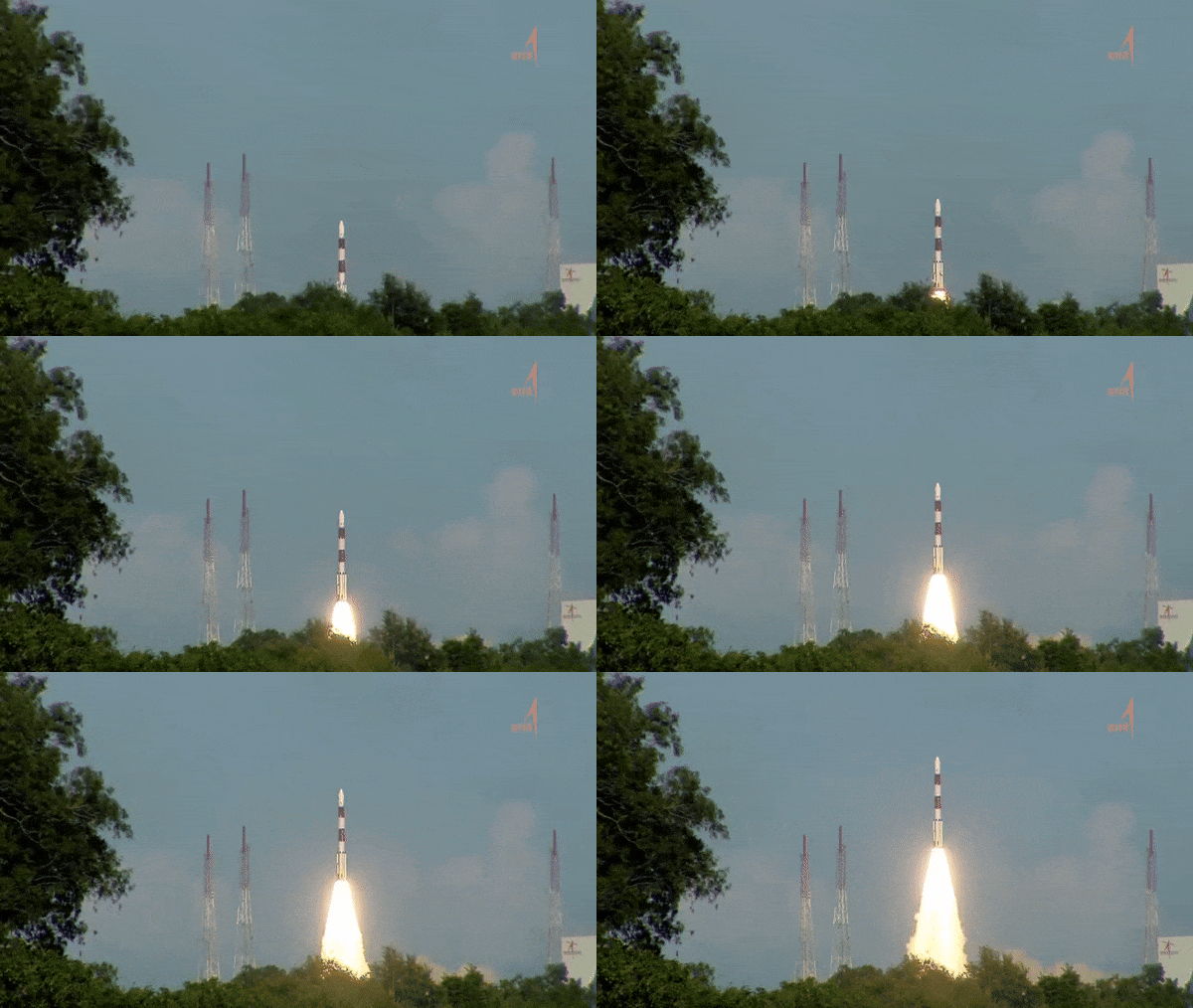
The PSLV-C62 lifted off flawlessly from Sriharikota at 10:18 AM IST, carrying the primary EOS-N1 Earth observation satellite Anvesha for DRDO and 15 other co-passengers from various nations into a planned 512 km Sun-Synchronous Orbit.
Trouble struck during the third stage (PS3) final burn, causing a deviation that prevented orbital insertion and doomed most payloads to uncontrolled re-entry. Isro Chairman V. Narayanan confirmed the anomaly, with detailed analysis underway, marking the agency’s second PSLV setback after C61 last year.
KID’s Heroic Performance
Orbital Paradigm detailed the drama in a LinkedIn post, revealing KID re-entered coupled to PS4 at a punishing -20° angle, four times steeper than the nominal -5°, triggering separation via UARX Space’s ring at Mach 20, twenty times the speed of sound.
The capsule withstood peak G-loads of 28g (nearly double expected), with internal temperatures holding payloads steady between 15-30°C amid intense heating.
First data captured pre-impact moments, though customer payload transmission was cut short by ocean splashdown in an uninhabited zone.
Data’s Lasting Value
This off-nominal telemetry, rare real-world extreme-condition insights, validates KID’s design for future reusable capsules, accelerating Orbital Paradigm’s Kestrel program.
Experts view it as invaluable for refining re-entry tech, offering lessons beyond simulations. For Isro, the focus shifts to root-causing the PS3 issue ahead of critical missions like Gaganyaan and Chandrayaan-4.
The episode shows private space firms’ resilience amid public agency hurdles, blending failure with innovation in India’s bustling space sector. Orbital Paradigm promises a full trajectory report soon.
– Ends


