
Rare case!
In today’s times, wherein the background music score (a vital part of any film) is largely composed by entities other than those who have done the songs, it is remarkable to find examples where it is done by the same names, that too usually for specific films or filmmakers. Pritam prefers to score the BGM for films of Karan Johar and Anurag Basu, Sachin-Jigar for Dinesh Vijan and so on.
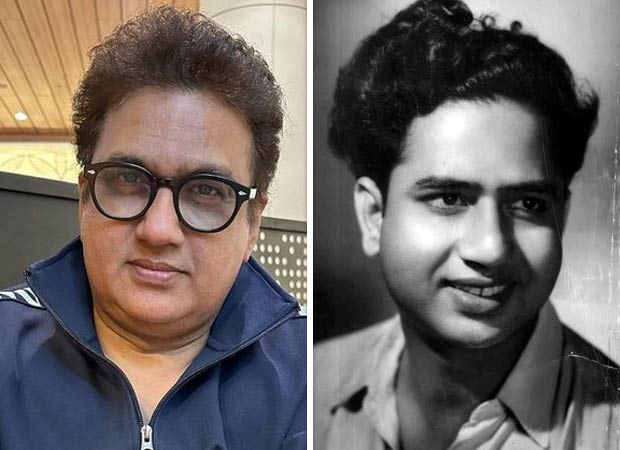
Trivia Tunes: Film based on Daboo Malik and his father Sardar Malik’s conflict could never get a release
However, in the past, it was equally rare that a song composer did not do the BGM. A standout example here was the musical hit, Dil Deke Dekho, with music by debutant Usha Khanna. The score was done by Master Sonik. Sonik was also arranger with Madan Mohan and along with his nephew, Omi, formed the Sonik-Omi team, beginning with the brilliant Dil Ne Phir Yaad Kiya (1996).
Visually-challenged masters
Sonik was visually-challenged, which can give us an idea of his brilliance in the Nasir Husain directorial. A regular with BGM was the other, more prolific (and solo) visually-challenged composer. Ravindra Jain. When I had met him and asked how he could compose the score for the visuals, his simple reply was, “If the timing is given, background music can be easily done.”
From N.N. Sippy to Tarachand Barjatya!
In an interview with a friend, Ravindra Jain has revealed that the cult classic, ‘Ankhiyon ke jharonkhon se’, which gave the 1978 Rajshri Production film its name too, was originally composed by him for producer N.N. Sippy’s Ghar. Sippy had signed Jain as he had been his composer in Chor Machaye Shor and Fakira (and also a lyricist in Kalicharan). “The director did not like the song and felt that it was too slow. The next day, I sang the same tune to Rajkumar Barjatya (Sooraj R. Barjatya’s father), who liked both the tune and the lyrics. He even decided that the film’s title should be Ankhiyon Ke Jharokhon Se. Soon after that, I received a call from Sippy-saab, who said that he had discussed the matter with his director and now he wanted it for their movie! Now how could I take the tune back from Rajshri? That was not possible. That led to a great dilemma and a bit of bitterness, too!”
…And from Shakti Samanta to Feroz Khan
This time, there was no bad blood and it was only the mukhda that was disapproved by one filmmaker. The legendary Indeevar had penned the words ‘Hum tumhein chahate hai aise / Marnewala koi zindagi chahata ho jaise (I yearn for you with the same intensity as a dying man desires to live)’ for Anand Ashram. The inspiration clearly was the fact that the film’s protagonist was a doctor. Shakti (Aradhana) Samanta felt that reference to death in a romantic song was not right. But when the master lyricist shared it with Feroz Khan, he loved it, and the result was the Qurbani hit composed by Kalyanji-Anandji.
The poignant story of the Malik brothers
Think of Amitabh Bachchan’s own productions and we cannot but recall the musical excellence of Abhimaan (S.D. Burman), Khuda Gawah (Laxmikant-Pyarelal) and Tere Mere Sapne (Viju Shah). But there was another film that never got a release, and whose standout music remains unheard, except in tiny glimpses in its promos on Big B cassettes (ABCL’s short-lived music label). That film was Gaayak, with music by Anu Malik. Composer Daboo Malik, Anu’s brother and assistant then, and father to Amaal and Armaan, has recalled the film in a poignant reminder in his excellent autobiography, ‘Never Too Late’. He has revealed that it was based on his own life-story of conflict between a father (the late Sardar Malik) wanting his son to take up “a safe job” instead of becoming a musician, and a son being “soaked in music”.
Among the older heroines, Asha Parekh and Sadhana share the distinction of having the maximum timeless songs that were excellent as well as chartbusters. Unlike Sadhana, whose Intaqam and Geetaa Mera Naam with Lata were home productions, Asha, incredibly indeed, never had a close contact with Lata Mangeshkar. In fact, in an interview with a musicologist, she regrets the fact that she could never meet her!
And this was strange keeping the culture of the industry then. From innumerable Lata beauties, Asha specifically mentioned ‘Suno sajana’ from Aaye Din Bahaar Ke and ‘Aaja piya tohe pyar doon’ from Baharon Ke Sapne and she was self-confessedly even present when the title-song of Main Tulsi Tere Aangan Ki was recorded. She recalled that Lata was unwell on the day and was (along with others present) moved to tears when she was singing!
Filmmaker-composer records
We mentioned above that Ravindra Jain has done 18 films for the Rajshri banner from Saudagar (1973) to Jaana Pehchana in 2011. This is a record unmatched for a banner-composer association. So far as directors are concerned, the record is held by T. Rama Rao and Laxmikant-Pyarelal with 20 films from Lok Parlok in 1979 to Majboor in 1990.
BOLLYWOOD NEWS – LIVE UPDATES
Catch us for latest Bollywood News, New Bollywood Movies update, Box office collection, New Movies Release , Bollywood News Hindi, Entertainment News, Bollywood Live News Today & Upcoming Movies 2025 and stay updated with latest hindi movies only on Bollywood Hungama.


